
“Under-studied, under-screened, under-diagnosed and under-managed” is how Dr. Rubee Dev describes cardiovascular disease in women, “and the need to address it is urgent.”
That is because cardiovascular disease, or CVD, is the No. 1 cause of death in women worldwide: it accounts for one-third of all premature female deaths. In addition, four out of five of those deaths occur in low- and middle-income countries. It was this compelling reason that propelled Dr. Dev, Assistant Professor in the UBC School of Nursing (Faculty of Applied Science), to submit a proposal for a competition last fall to support her project, “Women’s Heart Health in Nepal: Missed Opportunities and Paths Forward.”
In March 2025, Dr. Dev joined the roster of six UBC researchers* awarded up to $10,000 each from the Seed Funding for Cooperation with the Global South, a competition managed by the UBC Office of Global Engagement and funded by the UBC Academic Excellence Fund. The grant enables researchers to form new collaborations, or strengthen existing ones, with partners in the “Global South.” All 2025 projects addressed global challenges and promoted sustainable development through capacity development, joint academic projects, research and knowledge exchange.
Dr. Dev’s project, which wrapped in August, convened 15 CVD researchers, healthcare providers (cardiologists, gynecologists, nurses) and policymakers in Nepal for a roundtable discussion and workshop to address challenges, highlight priority areas and establish future directions for research in the field. Key aims were to understand risk factors, identify research gaps, conceptualize future research queries and develop strategic partnerships to improve health outcomes for women in Nepal, with a view to broader implications. We spoke to Dr. Dev about her project.
Why did you want to lead this project?
There is such a need to have to work done on this area. It is important, but no one is addressing it in Nepal. I’m a women’s CVD researcher whose focus spans nationally and internationally, and I have a deep understanding of the context in Nepal due to my nursing experience providing pre- and postnatal care to women from 2007 to 2012.
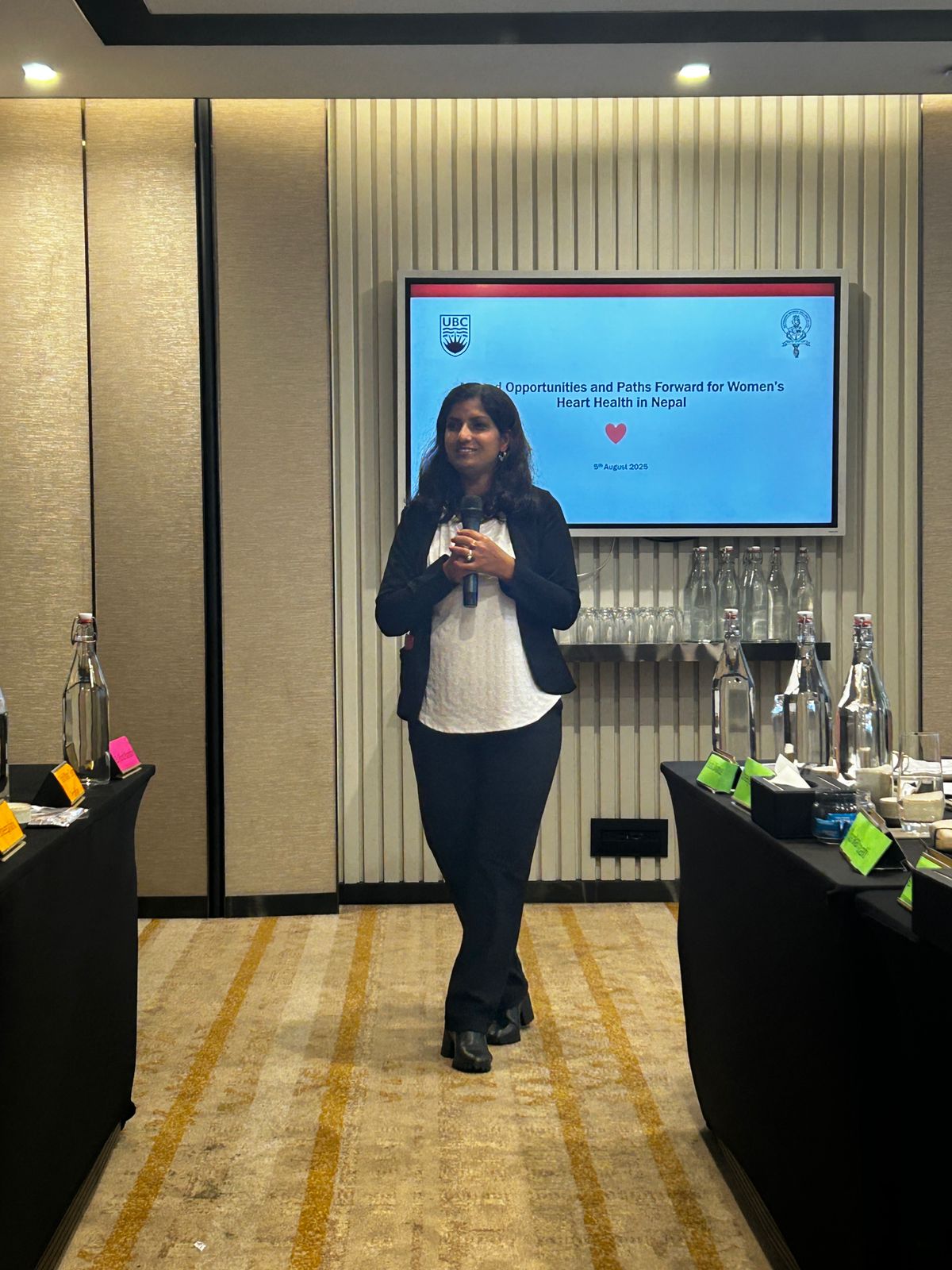
Dr. Rubee Dev facilitating a roundtable discussion on women’s cardiovascular health with the research participants in Kathmandu (photo: Bhawana Ghimire)
Why Nepal?
CVD has become the leading cause of maternal death after the early postpartum period, surpassing traditional causes, such as postpartum hemorrhage. Four in five such CVD related deaths occur in low-and- middle-income countries such as Nepal. Despite the global alarming statistics and rising CVD trend, there is limited study on women’s CVD in Nepal. Recognizing the necessity for research on women’s heart health, I contacted national health organizations in Nepal and my colleagues, who validated that there were no ongoing efforts. So I felt better-positioned to do this research in Nepal having the cultural context and background there. And, I had collaborators, experts in the field, whom I was following on Linkedin: Dr. Abhinav Vaidya and Dr. Natalia Oli. They are also global health leaders, and I came to know they were doing similar work. So, I reached out. I asked if they were interested in collaborating with me, and they graciously agreed—and that’s how it all started.
What is CVD exactly?
Most people are familiar with the term “heart disease,” which refers to any issues related to the heart. The most commonly understood are heart failure and cardiac arrest.
Women’s cardiovascular disease: "Under-studied, under-screened, under-diagnosed and under-managed, and the need to address it is urgent."
Do we know why it disproportionately affects women? And why women from low- and- middle-income countries in particular?
It’s because of women’s different hormonal factors. Most of the time, it’s pregnancy-related risks: hypertension during pregnancy, for example, or gestational diabetes, abortion or pre-term birth. Pregnancy is a stress test for women: the nine months when they go through many hormonal changes, which can cause vascular changes. Females who experience early menarche (the onset of menstruation) or early menopause are also at higher risk compared to other women who don’t have that. These are all considered risk factors for women. Smoking and obesity are factors as well, of course, and those are common in both men and women.
In low-and middle-income countries, people have traditionally relied on agriculture and had an active lifestyle. Now we are seeing those countries embracing lifestyles and dietary habits associated with the Western world—and all the risk factors that come with those—embracing a sedentary lifestyle and eating processed food. This is one of the reasons why CVD is on the rise in low- and middle-income countries, and that is picking up elsewhere around the world.
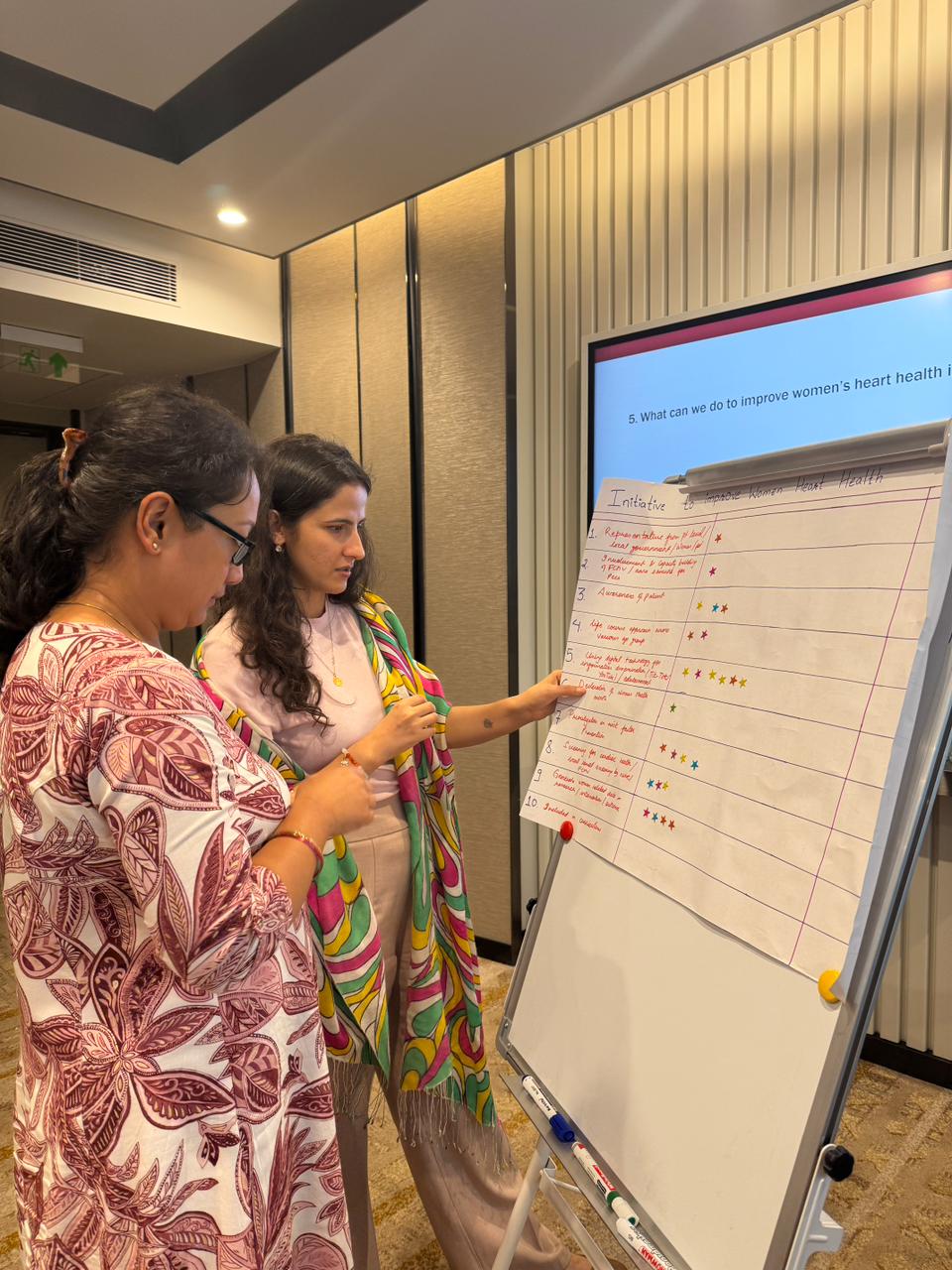
Workshop attendees ranked strategies for enhancing women's heart health in Nepal according to their significance and practicality (photo: Dr. Ashna Parajuli)
What are the next steps to combat CVD in Nepal?
The main goal of this research is to come up with a strategy: to understand cultural disparities in Nepal and risk factors unique to that context. There is one main national heart centre in Kathmandu for heart health care, which has large amounts of data, but no one is using it and the data gets destroyed every five years. The data is with the clinicians, and they don’t have the time to analyze it. Our group also started talking about nutrition during the postpartum period, undernutrition and micronutrients deficiency that are linked with CVDs.
One cardiologist brought up the rural-urban trend. Clinicians reported that even a woman with a normal BMI who appears healthy (due to being asymptomatic) from rural areas experience more heart attacks and CVD. As a result, one cardiologist conducts more screening and diagnostic tests on women from those areas because they don’t know why that’s happening.
We came up with different strategies: promoting age-related interventions and strengthening grassroots efforts for preventing non-communicable diseases and risks. Even though clinicians are over-burdened, there has to be way of strengthening their work since the data is there. The data I have seen has informed and validated what I already knew. We will partner with collaborators so we can have access to that data and evidence for longitudinal research.
And worldwide?
There is a need to capture female-specific CVD risks in a database—in Nepal and in the Canadian context. We are still having difficulty finding a database for female-specific CVD risk factors in Canada, and that applies globally.
What’s next for you?
We as a team in Nepal want to expand my collaboration there since we’ve now identified so many areas we can address through Canadian, Nepal and other support funding worldwide. Next we will apply for a seed grant through the Institute for Global Health at BC Children’s Hospital and BC Women’s Hospital + Health Centre in October 2025. If we are successful, we will apply some of our learnings from this grant.
Find other UBC faculty-led projects supported by Seed Funding for Cooperation with the Global South.
Read about the new global health collaboration between UBC and African partner Amref International University in Nairobi, Kenya.
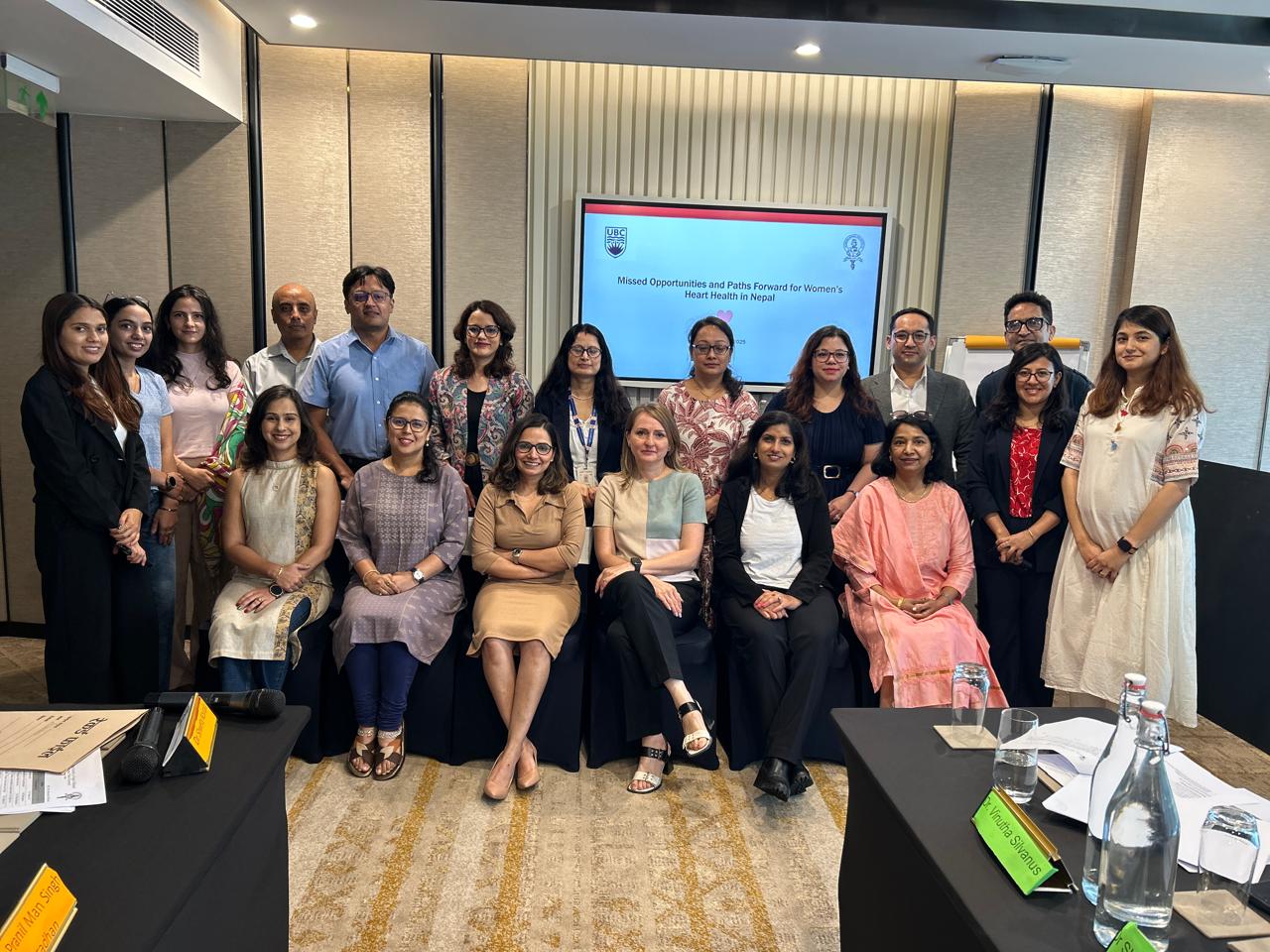
Members of the research team alongside the participants following an all-day roundtable discussion and workshop focused on women's heart health (photo: Rubee Dev)
*Other 2025 Global South seed funding recipients are:
Dr. Hannah Wittman, Professor, UBC Centre for Sustainable Food Systems at UBC Farm (Faculty of Land and Food Systems) and UBC Institute for Resources, Environment and Sustainability (Faculty of Science): Co-Designing a Participatory Soil Health Toolkit and Research Plan
Dr. Khumbo Kalua, Associate Professor, UBC School of Population and Public Health (Faculty of Medicine): Global Health Collaboration between UBC and AMIU
Dr. Elizabeth Shaffer, Assistant Professor, UBC School of Information (Faculty of Arts): Strengthening the Refugee Law Project’s Digital Archive
Dr. Fatawu Abdulai, Assistant Professor, UBC School of Nursing (Faculty of Applied Science): Developing Health Informatics Competency Frameworks for Nurses in Ghana
Dr. Sara Beck, Assistant Professor, UBC Department of Civil Engineering (Faculty of Applied Science): Advancing Research on Sustainable Water, Sanitation and Hygiene Solutions